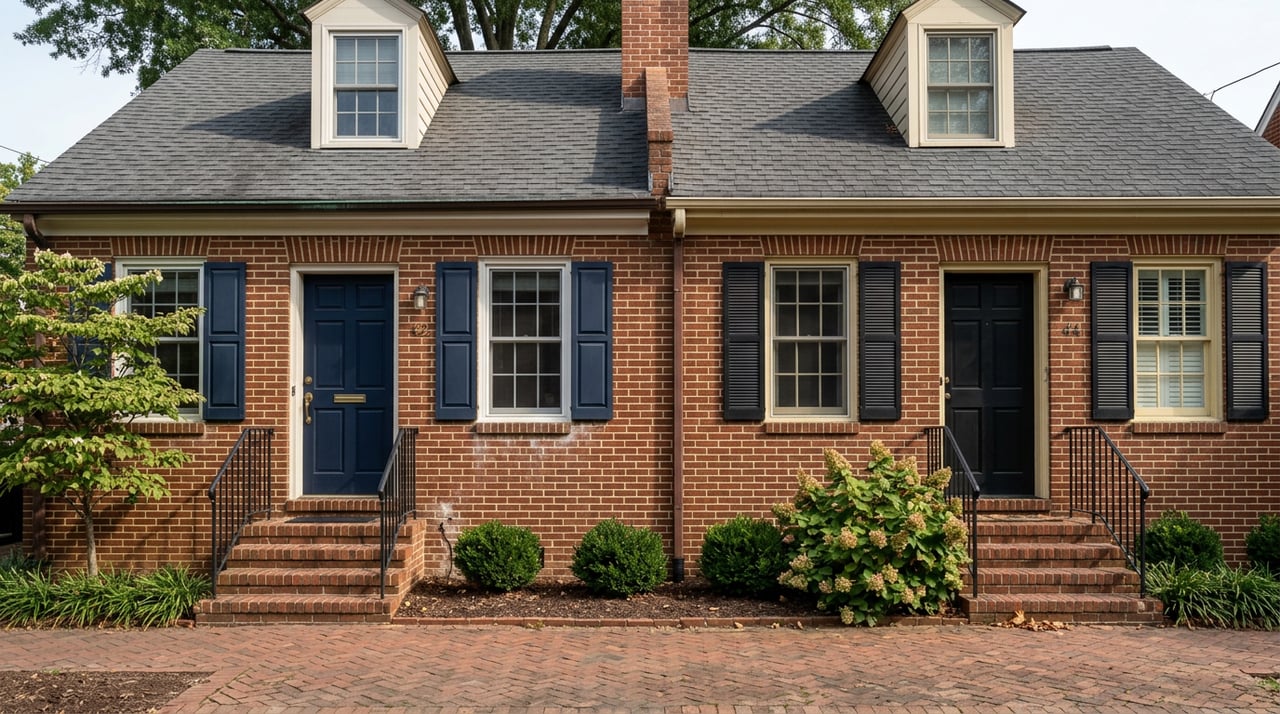
Two townhomes go under contract the same week, both inside the City of Williamsburg, both priced within a few thousand dollars of each other. One buyer's closing disclosure shows a real estate tax line that matches what every "lowest rate in Virginia" headline promised. The other buyer's number is nearly two and a half times higher. Same city. Same advertised rate. Wildly different bill.
That second buyer isn't the victim of an error. They bought inside the Quarterpath Community Development Authority district, and almost nobody explains what that means until the numbers show up in writing.
The rate on the sign isn't the rate on the bill
Williamsburg City Council passed its FY2027 budget resolution on May 27, 2026, holding the real estate tax rate at 62 cents per $100 of assessed value, the same rate the city has advertised for years as the lowest of any city in Virginia. If you've read that headline and assumed it tells you what you'll actually owe, you're only holding half the equation.
The other half is assessed value, and it moves independently of the rate. The city's own resolution language for FY2027 is built on "an increase in the City's total assessed value of real property" while the rate stays flat. The City's real estate assessment page says reassessment notices for the current cycle went out on February 27, 2026, effective as of January 1, 2026, and those values are what determine your first FY2027 tax bill, due December 1, 2026, with the second half due June 1, 2027. A flat rate on a rising assessment still produces a rising bill. That pattern held the last time the city walked through this same math, and the city's own budget language confirms it's holding again this cycle.
So before the rate ever gets interesting, the first correction to make is simple: 62 cents is a multiplier, not a price tag.
The number nobody mentions until closing
Here's where it gets genuinely useful for anyone comparing addresses inside the city limits. Not every Williamsburg property is taxed at that 62-cent rate alone. Properties inside the Quarterpath Community Development Authority district carry an additional real estate levy of 87.8 cents per $100 of assessed value, on top of the base city rate. That figure comes directly from the Virginia Department of Taxation's official Local Tax Rates Survey, not a rumor or a rounding error.
Add the two together and a property inside the Quarterpath CDA boundary is looking at a combined effective rate of roughly $1.50 per $100 of assessed value, not 62 cents. That's not a typo, and it's not unique to one unlucky buyer. It's a special assessment district created to finance infrastructure tied to the Quarterpath at Williamsburg development, and it applies specifically and only to real estate inside that boundary. The city's own capital planning documents list Quarterpath at Williamsburg alongside High Street as areas where water and sewer expansion has required ongoing investment, which is part of why a financing district exists there in the first place.
Here's how the four most relevant numbers actually stack up once you put them side by side:
| Jurisdiction or district | Real estate tax rate (per $100 assessed value) |
|---|---|
| City of Williamsburg (base rate, FY2027) | $0.620 |
| City of Williamsburg, inside Quarterpath CDA | approx. $1.498 combined |
| James City County (FY2027, after cut) | $0.800 |
| York County | $0.780 |
Look at that table and the "lowest rate in Virginia" claim is still technically true. It's just true for a smaller slice of the city than the marketing implies, and irrelevant for anyone shopping inside a district that adds an extra 87.8 cents on top.
Why James City County's cut doesn't automatically make it cheaper
James City County's Board of Supervisors passed its FY2027-2028 biennial budget on May 26, 2026, cutting the real estate tax rate three cents, from 83 cents to 80 cents per $100, and layering on a one-time two-cent credit funded out of unassigned fund balance. On paper, that reads like relief. County Chair John McGlennon put a number on what it actually means for a typical homeowner going through the county's 2026 biennial reassessment, and it wasn't a savings. He noted the net effect for an average home with a typical assessment increase would be an increase of roughly $184, not a decrease.
That's the same dynamic playing out on both sides of the city line, just wearing different clothes. James City County cut its rate and still raised the average bill because assessed values rose faster than the rate fell. The City of Williamsburg held its rate flat and is doing the same thing through rising citywide assessed value. Neither jurisdiction is hiding anything. Both are simply proof that the rate alone was never the number that mattered.
How to actually find out before you write an offer
If you're comparing a listing in the City of Williamsburg against one in James City County, or comparing two addresses inside the city itself, the rate printed in a listing description or a headline article isn't enough to budget from. A few concrete steps get you the real number before you're locked into a contract.
- Ask directly whether the address sits inside the Quarterpath Community Development Authority district. The city's Quarterpath CDA page and the Commissioner of the Revenue's office can confirm this for a specific parcel.
- Pull the current assessed value from the city's real estate assessment records, not an estimate from a listing site, since the assessed value and the market value are frequently not the same figure.
- Multiply the assessed value by whichever rate actually applies to that parcel, base rate alone or base rate plus the CDA levy, and compare that dollar figure against the James City County or York County property you're weighing it against.
- If you're closing near the December 1 or June 1 billing dates, ask your lender how the escrow account will treat the transition, since a mid-cycle reassessment can change what gets collected monthly.
None of this is complicated once you know to ask. Most buyers simply never think to.
What this means if you're weighing neighborhoods, not just addresses
The broader lesson here isn't really about Quarterpath specifically. It's that a headline tax rate is a marketing number until you multiply it by the assessed value of the exact parcel you're considering, and every jurisdiction in the Historic Triangle, the City of Williamsburg, James City County, and York County, is currently proving that same point in its own way. A flat rate with rising assessments and a cut rate with rising assessments can land in the same place. The only way to know which address actually costs less is to run the real math for that specific parcel, not the press release.
A few questions worth asking before you assume
Does every property in the City of Williamsburg pay the Quarterpath CDA levy? No. It applies only to real estate within the CDA's specific district boundary tied to the Quarterpath at Williamsburg development. Properties outside that boundary pay the base 62-cent rate alone.
When will the 2026 reassessment actually show up on a tax bill? For the City of Williamsburg, the reassessment effective January 1, 2026 sets the FY2027 tax bill, with the first half due December 1, 2026 and the second half due June 1, 2027. James City County's Real Estate Assessments page says its 2026 biennial assessment follows the same FY2027 timing, with its first bill also due in December 2026.
Is a rate cut or a flat rate a reliable signal of a lower bill? Not on its own. Both the City of Williamsburg's flat rate and James City County's rate cut are happening alongside rising assessed values this cycle, which is the actual driver of what a homeowner pays.
If you're weighing a specific address against its actual tax math, not just the headline rate attached to its zip code, I'd rather walk through the real numbers with you before you write an offer than have you find out at closing. That's the kind of question I get asked constantly around Jamestown, Kingsmill, Toano, and every corner of James City County, and it's worth five minutes on the phone before it's a line item you can't undo. Reach out to Angie Archibald and let's run your specific numbers together, or start browsing listings with the real math already built into how I talk about them.
This article is general information, not legal, tax or financial advice. Consult a qualified professional about your situation.