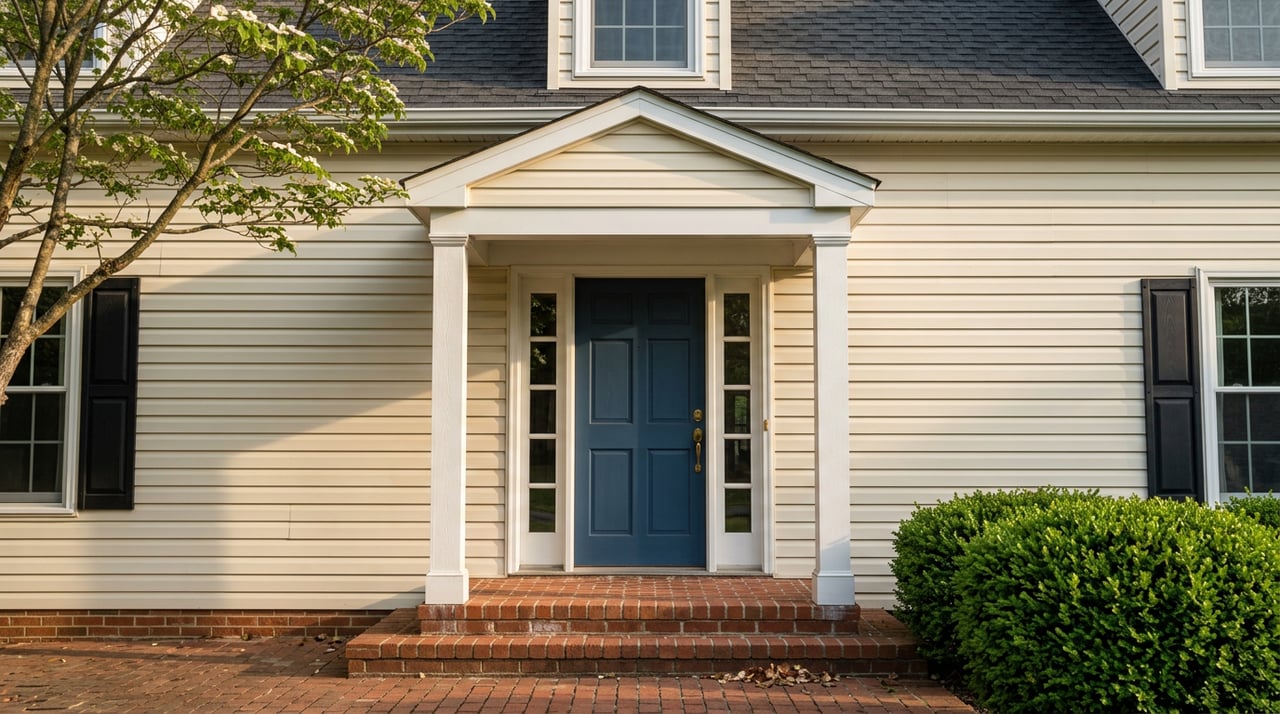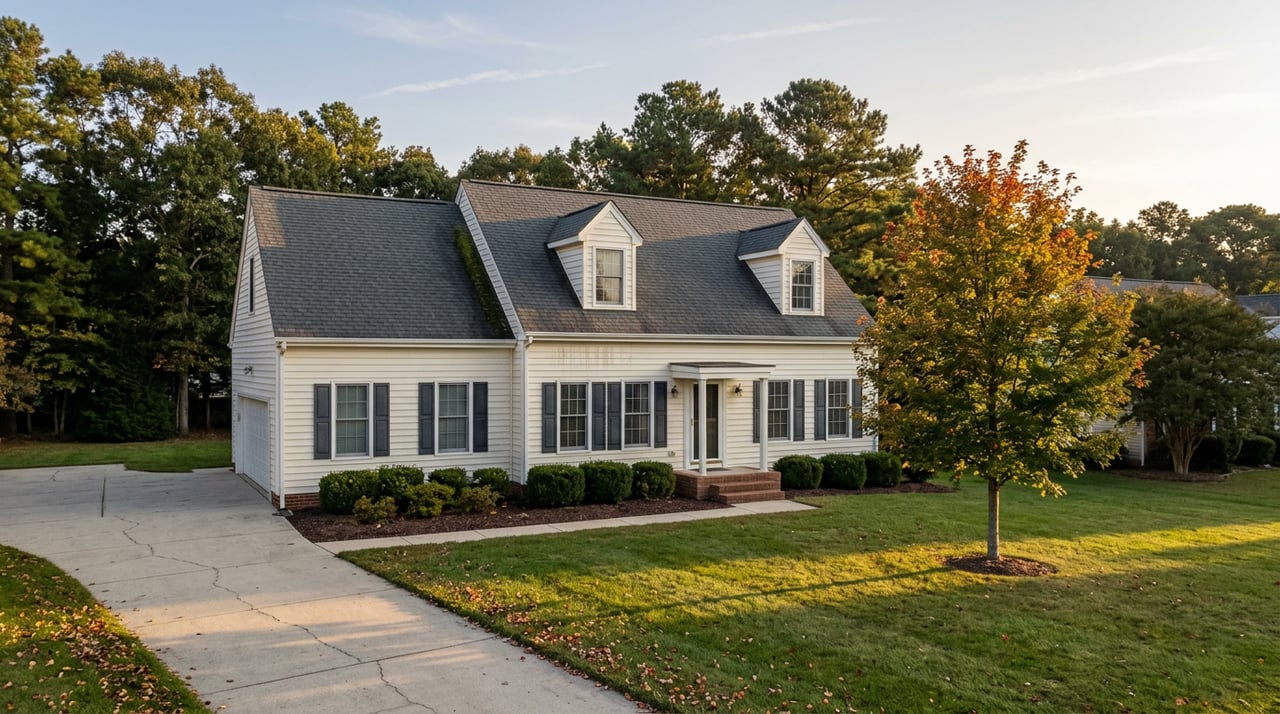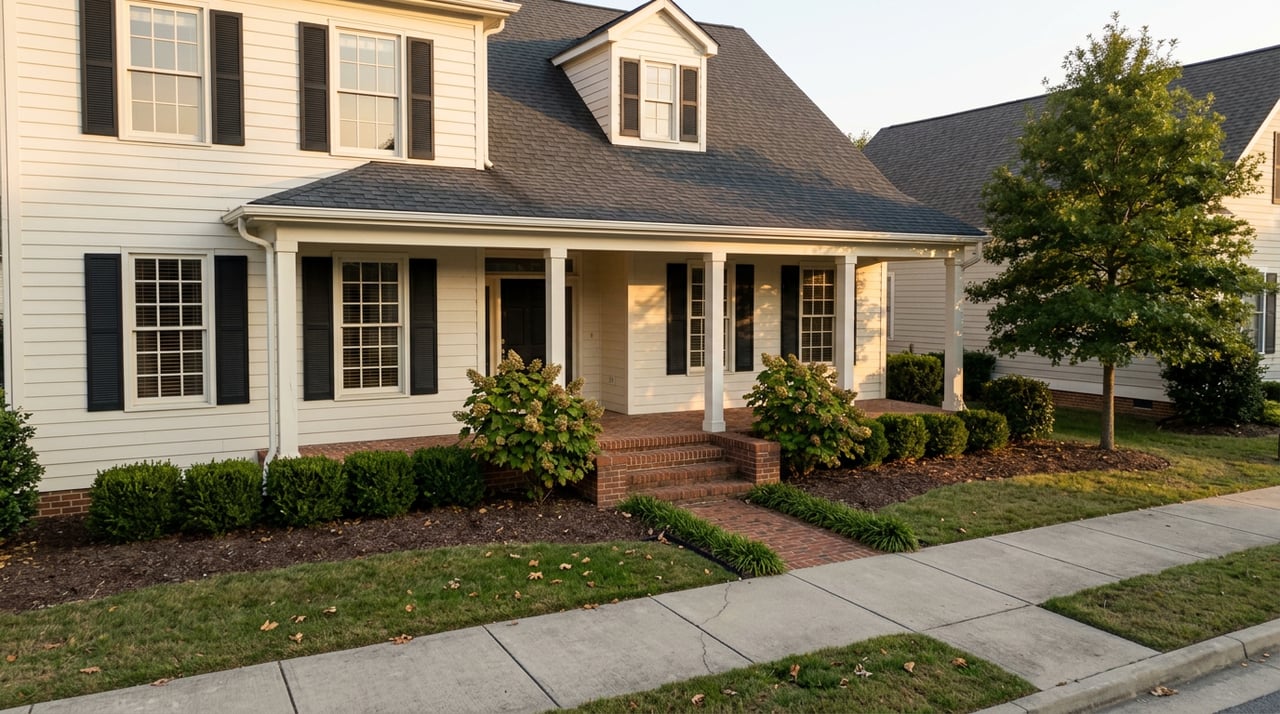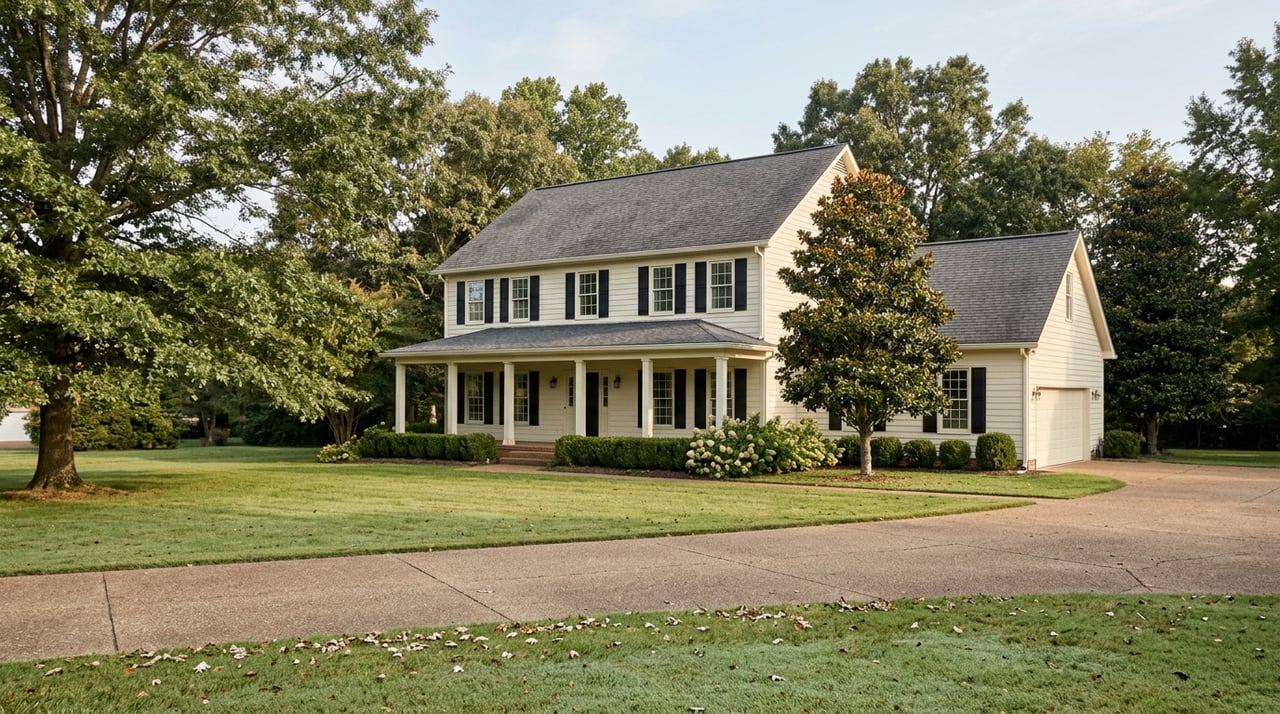
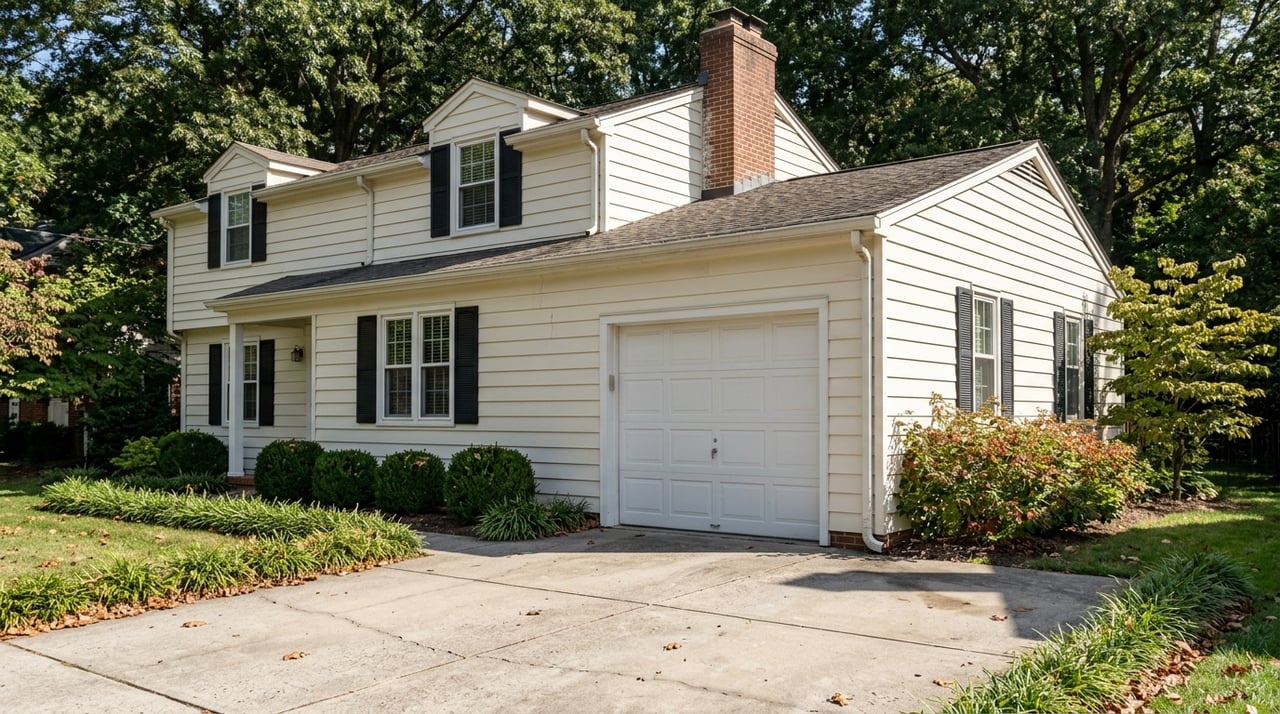
Walk two blocks off campus in either direction and you will find them: pairs of two-story colonials, same era, same brick-and-clapboard vocabulary, sometimes built by the same contractor in the same year. One sits with a station wagon in the driveway and a wreath on the door. The other has four bikes chained to the porch rail and a lease sign taped inside a window. On paper, the houses are twins. On a closing statement, they often are not.
The gap has nothing to do with granite counters or a finished basement. It comes down to a single piece of paper the city issues to almost nobody: a certificate that lets a single-family home rent to four unrelated tenants instead of three. If a house has one, it is worth more to a landlord than to a family. If it does not, and the seller priced it like it does, you are about to overpay for a rule you did not know existed.
The three-person rule most buyers never hear about
Williamsburg's zoning code defines a family narrowly for occupancy purposes, and under Section 21-161.1 of the city code, no more than three unrelated people may live in a single-family dwelling. The city set that limit through a 1991 council decision meant to balance interests in residential neighborhoods that sit close to a large university.
There is an exception, and it is the one that matters for anyone shopping near campus. Section 21-619 allows a homeowner to apply for administrative approval to bump occupancy from three unrelated people up to four. To qualify, the property has to be a standalone single-family home with only one dwelling unit on the lot, it has to sit inside a designated rental inspection district, and it has to provide four parking spaces, on-site or along the street frontage. Approved certificates expire after four years and have to be renewed.
Here is the detail that turns a zoning footnote into a pricing mechanism: that four-person approval transfers with the property when the house sells. A buyer is not applying for a fresh permit. They are buying one that already exists, attached to the deed, ready to rent out on day one to a group a family home legally cannot host next door.
Why so few houses have it
If the four-person certificate were easy to get, it would not move prices at all. It is not easy to get, and the reason traces back to a fight the city had with itself starting in 2019.
A workgroup called the Neighborhood Balance Committee spent 2019 and 2020 studying the tension between owner-occupied streets and student rental blocks, eventually producing 27 recommendations. One of the outcomes was a three-year moratorium the City Council passed unanimously in August 2021, freezing new four-person applications entirely. Longtime residents pushed for it. Flora Adams, who lived on Goodwin Street, testified that roughly half the 31 households on her street were students who left town whenever William & Mary was out of session, and she told council she worried about a nearby house near the end of Powell Street going up for sale, since a four-person permit follows the deed to the next owner and makes a home more attractive to an investor than to a family.
The moratorium did not touch homes that already had approval. It simply stopped new ones from being issued for three years. That is the scarcity a buyer is dealing with today: a fixed, aging pool of certificates that predates the freeze, plus whatever the city has approved since, and not much room for more.
By February 2026, that pool stood at 37 houses citywide holding four-person occupancy approval, concentrated in four rental inspection districts near William & Mary, Capitol Landing Road, and York Street, according to reporting on a City Council discussion that month.
The 2026 reform that was supposed to change this, and stalled
The city spent much of 2025 and early 2026 trying to modernize the system through a proposal called Rent Ready Williamsburg, a voluntary certification program that would score rental properties on interior and exterior quality. Under the version discussed in February 2026, homes that scored 95 or higher on the city's Quality Assessment could qualify for four-person occupancy more easily, and a square-footage requirement that had applied to the older process was dropped.
For a few months, it looked like the supply of eligible rentals near campus might loosen. Then it did not. At an April 2026 council meeting, Planning Director Tevya Griffin fielded questions about the draft, and Mayor Doug Pons summarized where support had gone: "There has been great support, but it seems like it's waning." Council member Ayanna Williams, the board's student representative, said the moment called for stepping back to make sure whatever the city pursued next was broadly supported. Council tabled further work until its next round of biennial goal setting later in the year.
That pause matters more than it sounds. It means the 37-permit ceiling from February is not a snapshot of a market in motion. It is closer to a market on hold. If you are comparing two houses near campus this fall, the one without a permit is not going to get easier to convert any time soon.
| Year | What happened |
|---|---|
| 1991 | City Council sets the three-unrelated-person occupancy limit |
| 2010 | City adds the path to increase occupancy to four with approval |
| 2019-2020 | Neighborhood Balance Committee studies owner-occupant vs. rental balance, produces 27 recommendations |
| Aug 2021 | Council passes a three-year moratorium on new four-person applications |
| 2023 | William & Mary begins its $700 million, decade-long dorm renovation plan |
| Feb 2026 | Rent Ready proposal reports 37 homes enrolled in four-person occupancy |
| Apr 2026 | Council pauses further work on Rent Ready, citing waning support |
What this means if you are touring homes this fall
None of this is a reason to avoid the neighborhoods around campus. It is a reason to ask a different question before you write an offer.
If you are buying as an owner-occupant, a four-person certificate on a nearby house is not a defect, but it is information. It tells you what kind of turnover and tenancy you might see next door, and it is worth understanding before you fall for a particular street.
If you are buying with rental income in mind, the certificate is the asset. A house without one is a bet on a permit application under a program the city just put on pause. A house with one already attached is a permit you do not have to win.
Demand for that off-campus supply is not shrinking either. William & Mary is roughly midway through a renovation plan that intends to replace or rebuild 80 percent of its residence halls within ten years, and construction phases have already sent students looking for beds off campus on short notice. Last fall, delays to three new residence halls left nearly 900 students needing temporary housing while the university sorted out permanent assignments. Every disruption like that pushes more upperclassmen into the same small pool of city rentals.
A few questions worth asking before you tour a home near campus:
- Is the property currently within a rental inspection district, and does it hold an active four-person certificate of occupancy?
- If it does, when does that certificate expire, and has it been renewed on schedule?
- If it does not, is the seller or listing agent implying rental income the house is not actually zoned for?
You can read the ordinance language yourself on the city's residential occupancy page, and WHRO's coverage of the April 2026 council discussion is worth a read if you want the fuller picture of where the policy stands.
A short FAQ
Does the three-person occupancy limit apply outside the city, in James City County? No. This is a City of Williamsburg ordinance. Occupancy rules in the surrounding county are set separately.
Can I just apply for a four-person permit after I buy a house that does not have one? You can apply, but approval is not guaranteed, the property has to meet the parking and inspection-district requirements, and the city's own reform effort to make that process more predictable was tabled in April 2026. Treat an existing certificate as something you are buying, not something you can count on adding later.
Zoning quirks like this one rarely show up in a listing description, which is exactly why they are worth understanding before you fall in love with a street. If you are weighing a purchase near campus, or trying to figure out what a specific address is actually zoned to allow, I would rather walk you through it now than have you find out at closing. Angie Archibald is a phone call away, and getting you the full picture before you write an offer is the whole job.